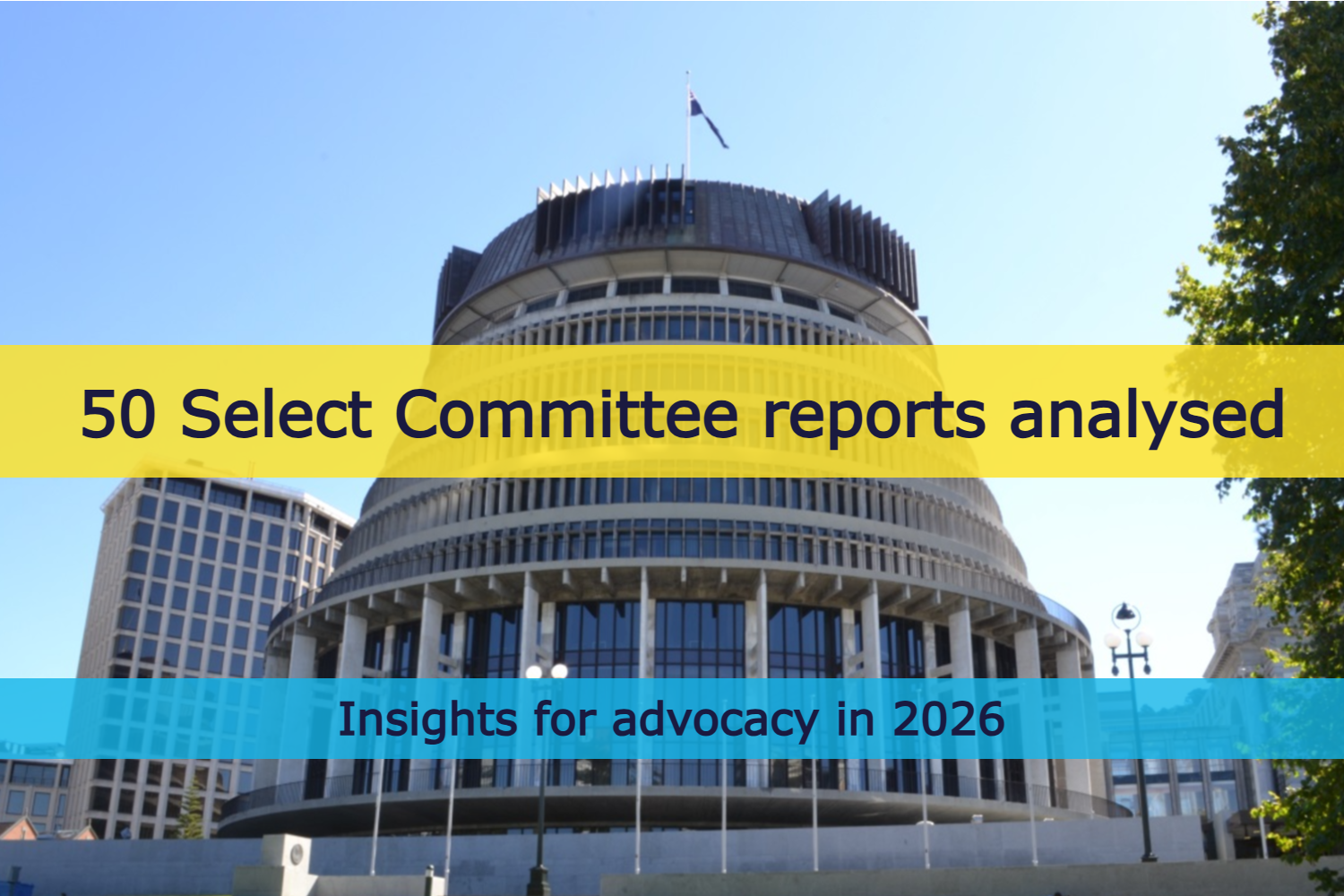
Early bird advantage for GR & Policy Teams

How Leading GR Teams Shape Policy
The most effective GR teams define success not by the quality of a submission, but by their ability to shape policy - before it is written.
If your Government Relations strategy starts at the consultation stage, it’s already too late. Across Aotearoa and globally, the shift is clear and growing: from submission writers to policy architects.
The Limits of the Submission Model
Formal consultation still sits at the centre of policymaking: submissions, feedback windows, structured responses. However, by the time a consultation is released, much of the direction is already set.
In practice, this model leads to:
- Late-stage engagement
- Fragmented information across agencies
- High effort, with limited influence
New Zealand evidence reflects this. The Ministry for Regulation's Regulatory Standards Bill Cabinet Paper highlights that “competing drivers and insufficient incentives… undermine regulatory quality,” with systems often favouring speed and process over deeper insight. BusinessNZ's 2024 work on reducing compliance burden for small business similarly found that late-stage consultation can miss implementation risks and weaken trust.
if engagement begins at the submission stage, the opportunity to shape outcomes is already constrained.
The Shift: From Submission Writer to Policy Architect
Successful GR and Policy teams are adopting a different posture. They know they must engage:
- Before consultation begins
- During problem definition and agenda-setting
- Across formal and informal channels
The question is not: “How do we respond to this proposal?”
It is: “How do we influence what gets proposed in the first place?”
This is not theory. It is a capability, and increasingly, a requirement.
High-Performing Teams do it differently
High-performing GR teams operate inside the policy cycle, not outside it.
1. Monitor the Pipeline Early
Policy rarely appears out of nowhere. It emerges through a series of "signals", Cabinet papers, agency work programmes, ministerial speeches, and early-stage departmental discussions.
- Leading teams identify risks and opportunities months earlier.
2. Share Insight Before It’s Requested
They bring forward evidence, operational insight, and sector intelligence early.
- They help define problems, not just critique solutions.
3. Build Continuous Relationships
Engagement is ongoing, not episodic.
- They become trusted partners, not just respondents.
Public sector practice increasingly supports this approach: agencies that engage early and iterate with stakeholders produce more durable and workable outcomes.
Why This Matters
Early engagement isn’t just about influence - it improves outcomes.
The evidence is consistent. The OECD's 2025 Regulatory Policy Outlook and the DIA's Rules Reduction Report both point to the same finding: early, iterative engagement identifies real-world constraints faster, reduces unintended consequences, and improves regulatory quality overall.
For organisations, this means:
- Better policy outcomes
- Lower compliance costs
- Stronger credibility with government
As expectations shift, influence increasingly depends on whether you are engaged early, not just present at the end.
From Monitoring to Strategic Influence
For GA teams, this represents a step-change in capability.
The role is no longer defined by tracking consultations, writing submissions under time pressure and reacting to policy developments.
Instead, it is defined by:
- Seeing early
- Engaging early
- Shaping early
This is the difference between participating in the process and influencing it. Internationally, frameworks such as the IAP2 Spectrum of Public Participation reinforce the same direction:
“engagement is moving upstream”.
Are You a Policy Architect?
A quick test:
- Lead time: Can you identify policy shifts 3-6 months before consultation?
- Insight: Are you shaping problem definition, or responding to it?
- Access: Are you in the room early, or waiting for the announcement?
If any of these answers is no, your team is operating too late in the cycle, and the gap between you and more proactive competitors is growing.
Where Lumini Fits: From Visibility to Advantage
In a system where timing defines influence, visibility is the advantage.
Lumini gives GR and policy teams the ability to operate earlier and more strategically by:
- Surfacing emerging policy signals from over 200 channels
- Providing a clear view of how issues are evolving across government
- Highlighting early engagement opportunities
- Turning fragmented information into actionable insight
This changes how teams work.
Instead of reacting to policy once it appears, they can anticipate it. Preparing positions, engaging early, and shaping outcomes while they are still in motion.
Lumini exists to support this shift:
bringing forward the signals, context, and insight needed to engage earlier and more effectively.
Conclusion
The most effective teams are defined by how early and how effectively they engage.
- They monitoring continuously
- They build relationships deliberately
- They contribute insight proactively
The question is no longer: “did we respond?”
It's: “did we shape?”
If you’re waiting for the draft, you’re already behind.
Lumini ensures you’re never behind
The next Discussion Document won't wait for you to get ready. Book a 15-minute Strategy Session with the Lumini team. We'll show you exactly where your early signals are coming from, and how to act on them.