
Select Committee Advocacy in 2026
Select Committee Advocacy in 2026
What we did
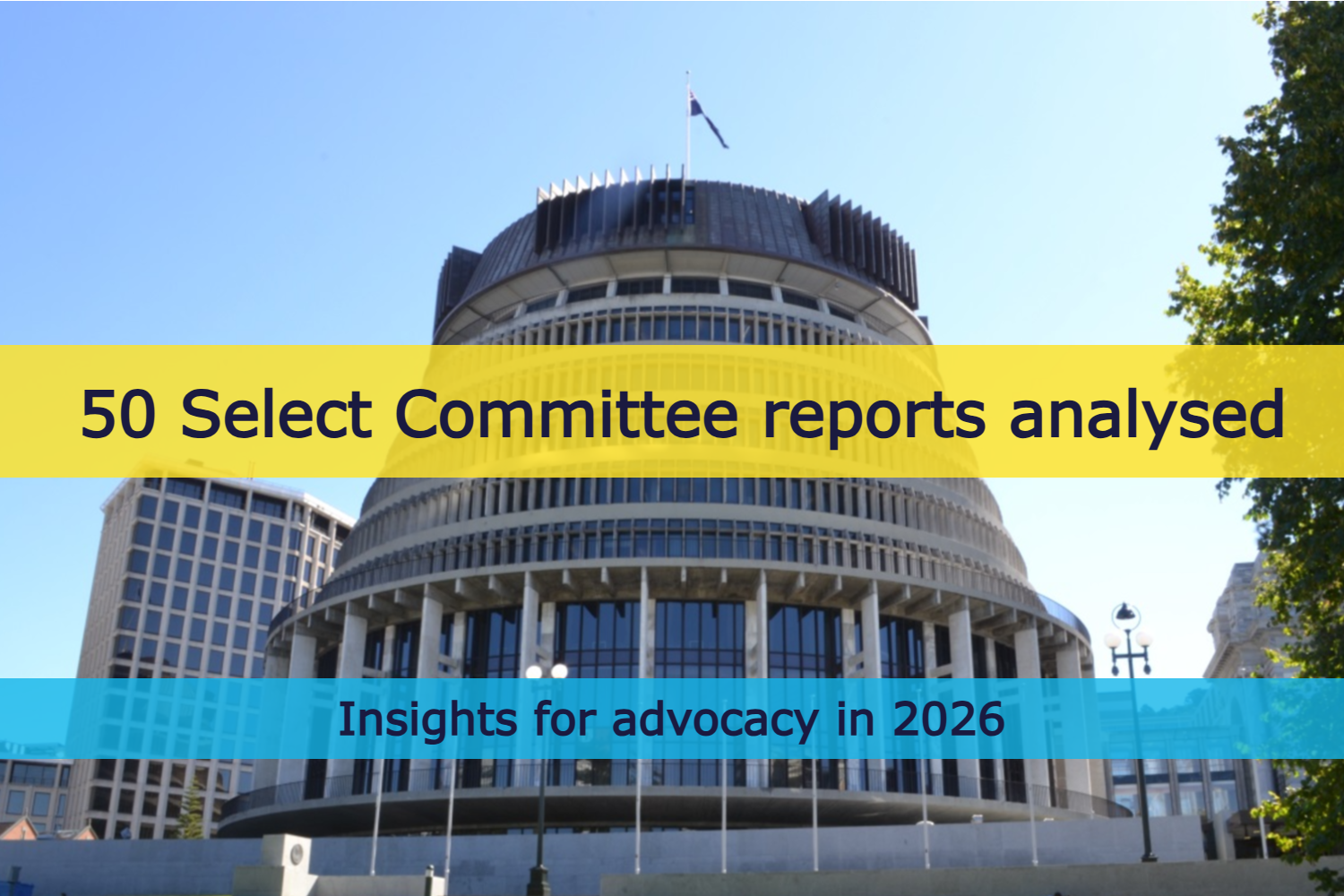
We analysed 50 Select Committee reports from the current Parliament to understand how Select Committee advocacy actually works in New Zealand right now.
Some of what we found is familiar. But the accumulated evidence points to an environment that has shifted more than most organisations have adapted to.
The Numbers Reveal
The numbers tell a part of the story of what we found.
The average consultation period across the 50 reports was 41 days. Several high-impact bills allowed considerably less. One was open for 11 days. Another for 12. At those timelines, organisations without standing evidence and rapid-response capability are at a significant disadvantage.
Effectiveness of Submissions
Then there is the question of whether formal submissions move the needle at all. On one of the most contested bills of this Parliament, the Regulatory Standards Bill, 98.7% of submissions opposed it. It proceeded largely unchanged. On another, Fast-track Approvals Bill, the most substantive amendments were introduced after the Select Committee process had concluded.
Patterns Defining Select Committee Advocacy
We found four patterns that define how Select Committee advocacy works in practice today: what kinds of arguments cut through, where influence is actually won and lost, and what the data reveals about timing, framing, and engagement beyond the committee room. The recommendations come from the reports themselves and the evidence we found.
If your organisation makes submissions, monitors legislation, or has policy outcomes it needs to protect or advance, the full report is worth your time.
Get the Full Report
This analysis was based on 50 Select Committee reports from the current Parliament. Click here to download the full report.